Taxonomy

* Digitati: labio in lacinias lineares exeunte.
* Fingered: lips exit linear from edge.
Biological Systematic is the study of the diversification of living forms, both past and present, and the relationships among living things through time. Relationships are visualized as evolutionary phylogenetic trees.
As part of the Biological Systematic , Taxonomy is the scientific study of naming, defining and classifying groups of biological organisms based on shared characteristics. Organisms are grouped into taxa (singular taxon) and these groups are given a taxonomic rank; groups of a given rank can be aggregated to form a more inclusive group of higher rank, thus creating a taxonomic hierarchy.
Within Taxonomy, Classification is the ordering of items into groups based on similarities or differences. It is the establishment of a hierarchical system of categories on the basis of presumed natural relationships among organisms.
Within Taxonomy, Binomial Nomenclature is a formal system of naming species of living things by giving each a name composed of two parts, both of which use Latin grammatical forms. The first part of the name – the generic name – identifies the genus to which the species belongs, whereas the second part – the specific name – distinguishes the species within the genus. So the genus us a group of species sharing some characteristics. The first part of the name is the genus and must be a word which can be treated as a Latin singular noun in the nominative case. The second part of the name, which identifies the species within the genus, is also treated grammatically as a Latin word. The first letter of the generic name is always capitalized in writing, while that of the specific name is not (ex. Strombus pugilis). The binomial name is usually followed by the “authority” – a way of designating the scientist(s) who first published the name – and the year of publishing (ex. Strombus pugilis Linneaus 1758).
Carl Linnaeus (1707 – 1778) was a Swedish botanist, zoologist, taxonomist, and physician who formalised binomial nomenclature, the modern system of naming organisms. He is known as the “father of modern taxonomy”. The first edition of Systema Naturae was printed in the Netherlands in 1735. It was a twelve-page work. By the time it reached its 10th edition in 1758, it classified 4,400 species of animals and 7,700 species of plants. The establishment of universally accepted conventions for the naming of organisms was Linnaeus’s main contribution to taxonomy — his work marks the starting point of consistent use of binomial nomenclature. During the 18th century expansion of natural history knowledge, Linnaeus also developed what became known as the Linnaean taxonomy; the system of scientific classification now widely used in the biological sciences.
The Linnaean system classified nature within a nested hierarchy, starting with three kingdoms. Kingdoms were divided into classes and they, in turn, into orders, and thence into genera (singular: genus), which were divided into species (singular: species). Modern taxonomy includes a rank of family between order and genus and a rank of phylum between kingdom and class that were not present in Linnaeus’s original system.
Following the position today of the family Stromboidea in the hierarchical three of the phylum Mollusca as per the World Register of Marine Species (WoRMS). Please note that here I only consider living species, i.e. I’m not including in this classification extinct genera or any fossil specie.
Kingdom: Animalia Linnaeus, 178
Phylum: Mollusca Linnaeus, 178
Class: Gastropoda Cuvier, 1797
Subclass: Caenogastropoda Cox, 190
Order: Littorinimorpha Golikov & Starobogatov, 1975
Superfamily: Stromboidea Rafinesque, 1815
Family: Strombidae Rafinesque, 1815
Genua:

Aliger Thiele, 1929
Barneystrombus Blackwood, 2009
Canarium Schumacher, 1817
Conomurex Bayle in P. Fischer, 1884
Dolomena Wenz, 1940
Doxander Wenz, 1940
Euprotomus Gill, 1870
Gibberulus Jousseaume, 1888
Harpago Mörch, 1852
Labiostrombus Oostingh, 1925
Laevistrombus Abbott, 1960
Lambis Röding, 1798
Lentigo Jousseaume, 1886
Lobatus Swainson, 1837
Macrostrombus Petuch, 1994
Maculastrombus Liverani, Maxwell, Dekkers, 2021
Margistrombus Bandel, 2007
Mirabilistrombus Kronenberg, 1998
Neostrombus Liverani, Dekkers & S. J. Maxwell, 2021
Ophioglossolambis Dekkers, 2012
Persististrombus Kronenberg & Lee, 2007
Sinustrombus Bandel, 2007
Striatostrombus Dekkers & S. J. Maxwell, 2018
Strombus Linnaeus, 1758
Terestrombus Kronenberg & Vermeij, 2002
Thersistrombus Bandel, 2007
Thetystrombus Dekkers, 2008
Titanostrombus Petuch, 1994
Tricornis Jousseaume, 1886
Tridentarius Kronenberg & Vermeij, 2002
You can immediately note how some genera are very recent, meaning that the classification is something still continuously changing as well as new species, subspecies and forms still continue to be discovered. Indeed until few years ago, the family Strombidae species were still classified into 5 genera, following the classification of R.T. Abbott of 1960s: Lambis, Rimella, Strombus, Terebellum and Tibia and subgenera were used to then identify affinity subgroups.
Abbott classification

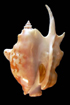
Genus Lambis
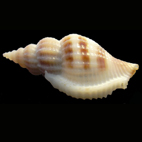
Genus Rimella

Genus Strombus

Genus Terebellum
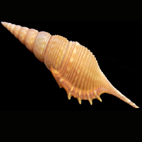
Genus Tibia
I will always be grateful to Mr Robert Tucker Abbot and his monographs (1941, 1969, 1967) of the different genera of the family Strombidae which introduced me in the world of the malacology. Abbot’s description of the Strombidae genera, subgenera and species has been a big an foundamental step ahead in the understanding of this family of seashells form the Liennean systematic classification. Abbott’s studies have been the basis for a number of conchologists towards the end of the XX century, still today passionately debating around this shell family classification.
Nowadays subgenera are not used anymore and promoted to genera with also new defined genera, for a total number of 30. In addition, the genera Rimella, Terebellum and Tibia, although still in the same superfamily Stromboidea, have been moved into different families, respectively Rimellidae (Stewart, 1927), Seraphidae (Gray, 1853) and Rostellariidae (Gabb, 1868).
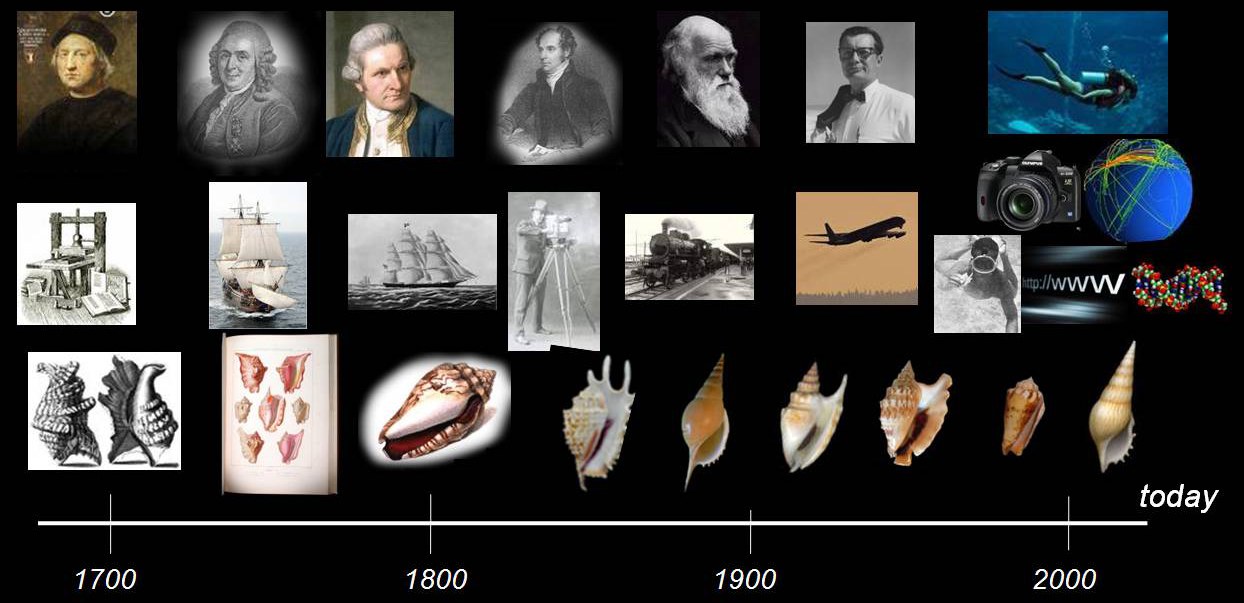
The continuous interaction between professional zoologists and private collectors, with the power of Internet to exchange new ideas and information, and the new methods of investigation based on DNA sequences available from the last decades of the XX century, gave a strong acceleration (Latiolais et al. 2006, Bandel 2007) of the Strombidae family taxonomy, and in general to the taxonomy of the entire Mollusca phylum: while private collectors provide their flexibility and freedom in proposing new species, subspecies and forms, formal institutions then review and reconnect to the rigorous scientific approach, so that subspecies and forms may appear, disappear and vary in a few years, as well as species can move between genera. All this is great and big stimulus to the progress of the taxonomy and understanding of the origin of these beautiful shells.
The fossils species of the superfamily Stromboidea, much more numerous than the living species and impossible to investigate in terms od DNA are also fundamental to understand the evolutionary relationship among the group of organisms, are in this web site out of scope: I will only consider here the living species of the 5 shell families Strombidae, Rostellariidae, Seraphsidae, Aporrhaidae and Struthiolariidae composing my personal collection of shells. I won’t conisder the family Xenophoridae Troschel, 1852, today (Irwin et al. 2021) classified under the superfamily Stromboidea.
Superfamily: Stromboidea Rafinesque, 1815
Family: Rostellariidae Gabb, 1868
Genua:
Rimella Agassiz, 1841
Rimellopsis Lambiotte, 1979
Rostellariella Thiele, 1929
Tenuitibia Dekkers, 2020
Tibia Röding, 1798
Varicospira Eames, 1952
Superfamily: Stromboidea Rafinesque, 1815
Family: Seraphsidae Gray, 1853
Genua:
Terebellum Röding, 1798
Superfamily :Stromboidea Rafinesque, 1815
Family: Aporrhaiidae Gray, 1850
Genua:
Superfamily: Stromboidea Rafinesque, 1815
Family: Struthiolariidae Gabb, 1868
Genua:
Pelicaria Gray, 1857
Perissodonta Martens, 1878
Struthiolaria Lamarck, 1816
Tylospira G. F. Harris, 1897


SPECIE: the largest group of organisms in which any two individuals of the appropriate sexes or mating types can produce fertile offspring, typically by sexual reproduction.
SUBSPECIES: one of two or more populations of a species living in different subdivisions of the species’ range and varying from one another by morphological characteristics. This means that groups of the same species that have independently evolved to adapt to different environments (ex. Lambis crocata crocata and Lambis crocata philsbry, endemic of the Marquesas Islands). Some taxonomists refuses the concepts of subspecies and prefer to classify as 2 different species.
FORM: individual of the same species which consistently show one or more different characteristics sharing the same or partial geographic distribution (ex. Canarium mutabilis f. zebriolatus).
NOMENCLATURE: the name of the species are assigned based on the binomial nomenclature in Latin, composing the scientific name which follows specific rules (genus, subgenus, species, subspecies, form, author year), the scientific name can also be abbreviated by only using genus and species (Lobatus gigas). Due to the continuous evolution of the phylogeny and taxonomy, species can move during the time through the classification tree, so that past scientific names are classifies as synonyms (ex. today Strombus gigas and Aliger gigas are synonims of Lobatus gallus, at the moment recognized as the official and unique scientific name). Lastly, the species normally have common names, i.e. names given by the local population in the geographical distribution species range in the local language (ex. Queen conch for Lobatus gigas).
Species description
To describe a shell a number of shell characteristics are considered, such as size, form and color. In addition to the shell, which is the exoskeleton of the animal, for the living shells also the soft parts should be considered if available, such as protuberances, radula and operculum. In particular for the shell a terminology has been developed including words such as apex, aperture or mouth, lip, spines, etc. The description of these animal parts and their characteristics compose the description of the shell species.
The original description is the first description of a new species done by the author of the species scientific name. Also the specimen used to build the original description is called holotype and the geographical location where the specimen was collected is the type locality. In addition to the holotype, also additional specimens can be used in the original description of a species to illustrate forms and variations along the same species population. These specimens are called paratypes. The holotype and the paratypes together compose a type series and is normally preserved (often in museums) as historically valuable material. Before the XIX century, it was common to describe a species from a single specimen, often without soft parts, so it was clearly the holotype. Nowadays the new species are described starting from a number of specimens, so that often none of them can be classified as holotype. That case the type series specimens are all called syntypes and have equal status.


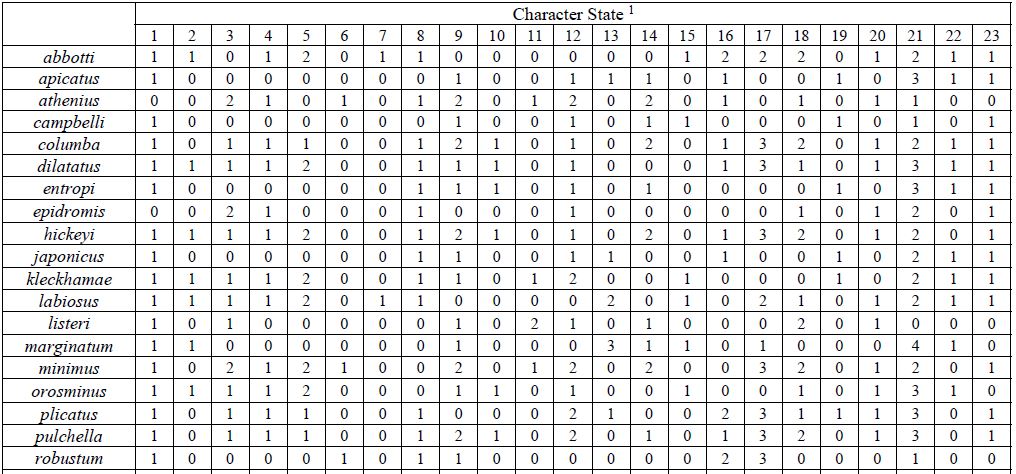

Taxonomy and Phylogeny are two terms related to the classification of organisms. As said, Taxonomy describes the activities related to classifying and naming living organisms. Phylogeny describes the evolutionary history of a species or a group of species.
Phylogenies can be estimated based on any information about organisms. We could compare differences and similarities in size (e.g., big versus small animals) or color (e.g., green versus black animals), and, in fact, animals were originally grouped based on aspects of their physical appearance or behavior. Today, scientists estimate relatedness among organisms primarily using differences in DNA sequences of living animals and in the anatomy of their fossil ancestors. A simple way to assess relatedness is to count the number of differences in DNA sequences.
Phylogenic trees are generated to show the evolutionary relationships among the groups of organisms and can be defined as a branching diagram or a tree like structure which shows the evolutionary relationships among various biological species or other entities. In these trees, lineages (branches) emerge from nodes (where branches meet) that represent the ancestors of currently living organisms. Lineages emerging from the same node, or ancestor, are more closely related to each other than either are to other lineages in the phylogeny. The end of a branch is called leaf. Sections of branches that do not lead directly to a leaf are “internal branches” that simultaneously represent descendants and ancestors in the phylogeny; that is, they descend from ancestral nodes and lead to descendant nodes.
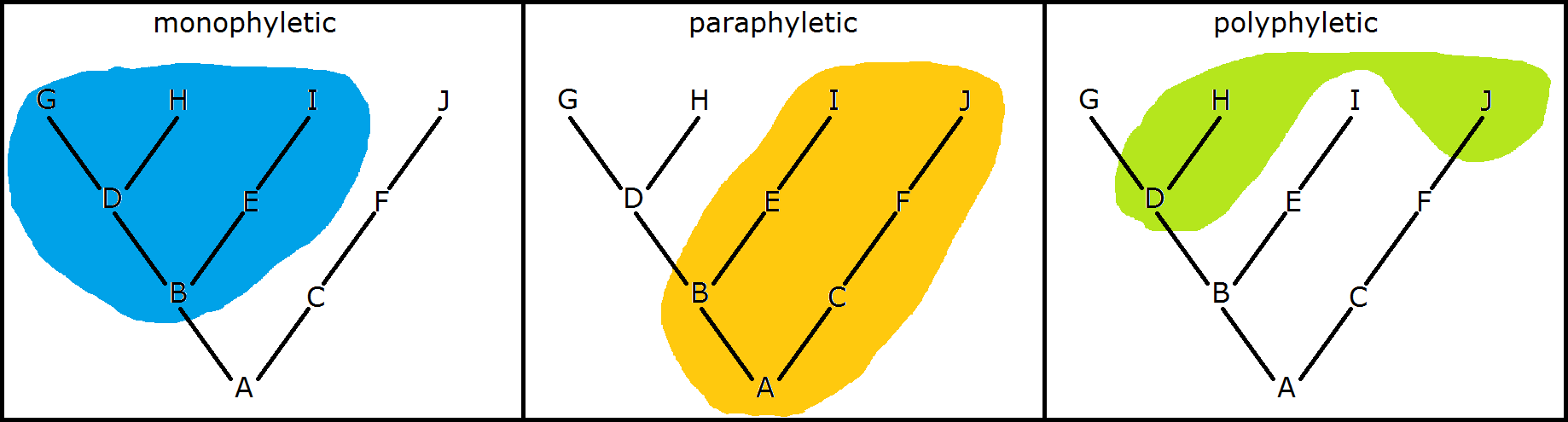
Monophyletic group: When a group of lineages in the Tree of Life includes an ancestor and all of its descendants. This group is called monophyletic (meaning “one branch”) or a clade. Clades can be grouped within each other in a hierarchy.
Paraphyletic (non-monophyly) group: If a group of organisms includes an ancestor and only some of its descendants, that group is called paraphyletic or non-monophyletic. Scientists care about distinguishing paraphyletic and monophyletic groups because monophyletic groups provide information about how evolution has occurred (which lineages emerge from which nodes) whereas paraphyly does not.
Polyphyletic group: is a set of organisms, or other evolving elements, that have been grouped together based on characteristics that do not imply that they share a common ancestor that is not also the common ancestor of many other taxa. The term is often applied to groups that share similar features known as homoplasies, which are explained as a result of convergent evolution (ex. birds and bats).
Another important difference in the classification is the difference between Phenetics and Cladistics.
Phenetics is an attempt to classify organisms based on overall similarity, usually in morphology or other observable traits, regardless of their phylogeny or evolutionary relation. It is closely related to numerical taxonomy which is concerned with the use of numerical methods for taxonomic classification. Phenetic analyses are unrooted, that is, they do not distinguish between plesiomorphies, traits that are inherited from an ancestor, and apomorphies, traits that evolved in one or several lineages.
Cladistics is an approach to biological classification in which organisms are categorized in groups (“clades”) based on hypotheses of most recent common ancestry.For what we previously said about phylogenic trees, a cladse is always monophyletic.
Phenetics has largely been superseded by cladistics for research into evolutionary relationships among species, but many systematists continue to use phenetic methods, particularly in addressing species-level questions. Classifying diverse groups of closely related organisms that differ very subtly is difficult using a cladistic approach. Phenetics provides numerical tools for examining overall patterns of variation, allowing researchers to identify discrete groups that can be classified as species. The two methodologies are not mutually exclusive and there is no reason why species identified using phenetics cannot subsequently be subjected to cladistic analysis, to determine their evolutionary relationships.
As said, the relationships displayed within a tree are scientists’ hypothesis and “best guess” as how these lineages are related based on the data used in the analysis. As new information comes to light with new studies, such as through new methods, and as new species are discovered, these analyses may give different results. This leads to changes in estimates of relationships among studies depending on which types of data and analyses are used. Thus, it is best to consider the phylogeny as representing our current understanding and that it could change with new discoveries.


